

Vape Battery Safety Tips – What Every UAE Vaper Should Know

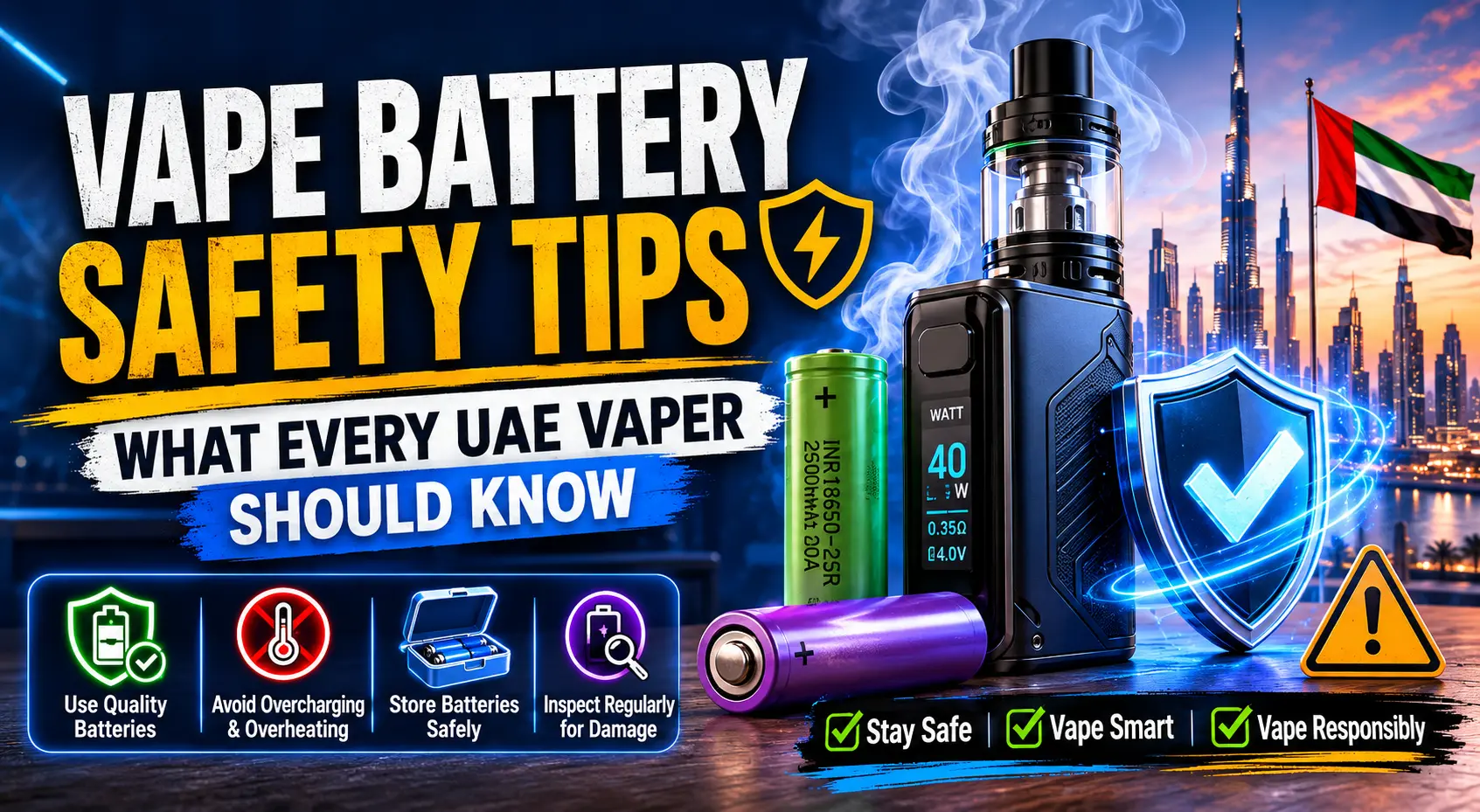
Nobody thinks about battery safety until something goes wrong. I have seen it happen — a device left in a car on a Dubai summer afternoon, a customer who had been charging their vape overnight for months without thinking twice, someone who bought a suspiciously cheap device from an informal seller and ended up with a battery that swelled within a week. None of these situations started dramatically. They all started with habits that felt fine until they were not.
Vape batteries are lithium-ion cells. The same chemistry that powers your phone and laptop also powers your disposable vape — and lithium-ion batteries have real failure modes that are entirely avoidable if you know what causes them. This guide covers the practical safety knowledge that every vaper in the UAE should have, whether you are using a compact 600-puff device or a high-puff rechargeable that you top up daily.
Why Vape Battery Safety Matters More in the UAE
Dubai’s climate creates conditions that do not exist in most other markets where vaping is common. Summer temperatures regularly exceed 45°C outdoors, and the interior of a parked car in direct sun can reach 70–80°C within minutes. Lithium-ion batteries are rated for a working temperature range — most disposable vape batteries are designed to operate safely between 0°C and 45°C. Push past that ceiling consistently and degradation accelerates.
This is not a theoretical concern. Battery swelling, e-liquid leakage, and reduced device lifespan are all more common in the UAE market than in cooler climates — and the vast majority of cases trace back to heat exposure, not device defects.
Understanding this makes almost every battery safety tip that follows more intuitive. The UAE context is the reason these habits matter here more than they might elsewhere.
How Vape Batteries Actually Work — the Short Version
You do not need an engineering degree to understand this. Here is what is relevant.
Disposable vapes use lithium-ion or lithium-polymer batteries. These batteries store energy by moving lithium ions between two electrodes — an anode and a cathode — through a liquid electrolyte. When the battery is in use, ions move one direction. When it charges, they move back.
The failure modes all stem from the same root causes: excessive heat accelerates the chemical reactions inside the battery beyond what the design can manage; physical damage compromises the structural integrity that keeps those reactions contained; deep discharge (running the battery completely flat repeatedly) degrades the electrode materials over time; and manufacturing defects in low-quality cells — common in counterfeit devices — mean the safety engineering that prevents these failures simply is not there.
Authentic devices from established brands like Elf Bar, Al Fakher, and Lost Mary — all available through Vapor Club’s disposable vapes range — are built with battery management circuitry that prevents overcharge, over-discharge, and short-circuit. Counterfeit versions of the same devices often lack this protection entirely.
The Most Common Vape Battery Mistakes in Dubai
Leaving Your Device in a Hot Car
This is the single most common cause of vape battery problems in the UAE. A device sitting on a car seat or dashboard in direct sun is not just warm — it is being exposed to temperatures well above its operational design limit.
The fix is simple: take your device with you, or store it in the glove compartment if your car has climate-controlled storage. If your device feels hot to the touch when you retrieve it, let it cool to room temperature before using it. Do not draw on an overheated device — the heat affects both the battery and the e-liquid consistency.
Charging Overnight or Unattended
Most rechargeable disposable vapes have basic overcharge protection built in, which cuts power when the battery reaches capacity. But relying entirely on that protection — particularly with devices you are less certain about — is unnecessary risk. Charging when you can keep an eye on it is the safer habit. A typical rechargeable disposable vape reaches full charge in 30–60 minutes from a USB-C connection. There is rarely a reason to leave it plugged in for hours.
Using Damaged Cables or Adapters
The charging cable and adapter you use matter. A frayed cable or a cheap third-party adapter with inconsistent voltage output can deliver irregular current to your device’s battery. Use the cable that came with the device where possible, or a quality USB-C cable from a reputable brand. This is a small thing that costs nothing to get right.
Carrying Loose Devices in Pockets with Keys or Coins
Metal objects contacting a charging port or battery vent can cause a short circuit. It is not common, but it happens. A simple case or a dedicated pocket keeps your device separated from other metal items.
Buying Counterfeit Devices
This deserves its own point because it is the risk with the most serious potential consequence. Counterfeit vape batteries have been documented to lack the protection circuitry that prevents thermal runaway — the failure mode that causes a battery to catch fire or explode. The incidents you may have seen reported in various markets involving vapes “exploding” almost always involve counterfeit or heavily modified devices, not authentic products from regulated brands.
Buying from a verified retailer like Vapor Club removes this risk entirely. Their stock comes from authorised distributors — every device has the genuine battery protection specified by its brand specifications.

How to Store Your Vape Safely in the UAE
Storage habits have a bigger impact on battery lifespan and safety than most vapers realise.
Room temperature is the target. Somewhere between 18°C and 25°C is ideal for lithium-ion battery storage. This is exactly what your home air conditioning maintains — so storing devices indoors when not in use is the right call in Dubai’s climate.
Avoid direct sunlight even indoors. A device on a sunny windowsill is not the same as a device in a cool drawer. Keep them away from direct light exposure.
Do not store at full charge for extended periods. If you have a spare device you are not planning to use for a week or more, storing it at full charge accelerates battery degradation slightly compared to storing at around 50% charge. This is a minor point for short periods but worth knowing if you stock up.
Keep devices upright where possible. E-liquid can shift toward the mouthpiece or leak toward the battery housing if devices are stored horizontally or inverted for long periods. Upright is the natural orientation for most disposable designs.
Signs Your Vape Battery Is Failing — What to Watch For
Most battery issues give you warning before they become serious. Knowing what to look for lets you act before the problem escalates.
The device feels unusually hot during use. A warm device during active vaping is normal. A device that is hot to the touch — particularly near the base where the battery sits — during or after use is a sign something is wrong.
The battery is swelling, or the casing is deformed. Lithium-ion battery swelling — where the cell expands due to gas buildup — is visible in some devices as a bulging or misshapen casing. If your device looks physically different from when you bought it, stop using it.
Rapid or unpredictable battery drain. If a rechargeable device that used to last a full day is dying within a couple of hours under similar use conditions, the battery is degrading faster than expected. With a disposable that is approaching the end of its e-liquid, this is normal. With a newer device, it warrants attention.
Strange smell during use or charging. A chemical or burning smell that is not related to the e-liquid flavor is a signal to stop using the device immediately.
The device does not respond or fires erratically. Inconsistent behavior — particularly a device that activates on its own or does not respond to draws — can indicate battery or connection issues.
If you notice any of the above, the correct response is to stop using the device, move it away from flammable materials, and dispose of it appropriately. Do not attempt to open, modify, or recharge a device showing these signs.
Safe Disposal of Used Disposable Vapes in UAE
This is the step most people skip entirely, and it matters both for safety and for environmental responsibility.
Disposable vapes contain lithium batteries and electronic components. They should not go into general household waste. Lithium batteries in general waste streams are a documented fire risk at waste processing facilities — this is the reason many countries have specific regulations around battery disposal.
In the UAE, responsible disposal options include:
- Retailer collection points. Some UAE vape retailers accept used devices for proper recycling. Ask at point of purchase.
- Electronics recycling facilities. Dubai Municipality operates electronic waste collection points across the city. Used vapes qualify as electronic waste.
- Brand take-back programs. Some brands have begun offering take-back or recycling schemes — check the manufacturer’s website for current programs.
Do not leave used devices in regular bins, particularly in summer when heat can cause residual battery charge to create issues in sealed waste containers.

Practical Daily Safety Habits — the Short Version
If this guide could be reduced to five daily habits, these are the ones that matter most:
- Never leave your device in a hot car. Dubai’s temperatures make this a genuine risk, not a theoretical one.
- Charge with attention. Use a quality cable, do not charge unattended for extended periods, and stop charging once the device is full.
- Buy authentic from verified sources. The battery protection in a genuine device is the engineering that keeps these safety tips relevant. Counterfeit devices do not offer the same guarantees.
- Act on warning signs immediately. Heat, swelling, strange smells — stop using the device and move it to a safe location.
- Dispose of used devices properly. Not in general waste. Use the right disposal channels.
Final Word
Battery safety is not complicated once you know what actually causes problems. Heat exposure, counterfeit devices, and careless charging habits account for the vast majority of vape battery incidents. All three are entirely within your control.
The disposable vapes collection at Vapor Club covers authentic devices from every major brand — built to the genuine specifications that make safe daily use straightforward. Start with a real device from a real retailer, follow the habits in this guide, and battery safety becomes one less thing to think about.
Frequently Asked Questions
Can a disposable vape explode in Dubai’s heat?
Authentic devices from reputable brands have thermal protection that prevents this under normal conditions. Leaving any vape in extreme heat — particularly inside a parked car — significantly increases battery stress. Counterfeit devices with no protection circuitry carry a genuinely higher risk.
Is it safe to charge my vape with a phone charger?
USB-C chargers from reputable brands are generally compatible and safe. Avoid very cheap or unbranded adapters with inconsistent output. The cable and adapter quality affect the current delivered to your battery.
How long should a vape battery last before it starts to degrade?
For rechargeable disposables, most lithium-ion cells maintain good performance for 300–500 charge cycles under normal conditions. In UAE heat, this can be shorter if devices are regularly exposed to high temperatures.
What should I do if my vape battery swells?
Stop using it immediately. Do not attempt to puncture, compress, or charge it. Move it away from flammable materials and dispose of it at an electronics waste collection point — not in general household waste.
Where can I buy safe, authentic vapes in Dubai?
Through a verified UAE retailer like Vapor Club. Authentic devices from authorised distributors carry the genuine battery management systems their brand specifications describe — which is the baseline for everything in this guide.